
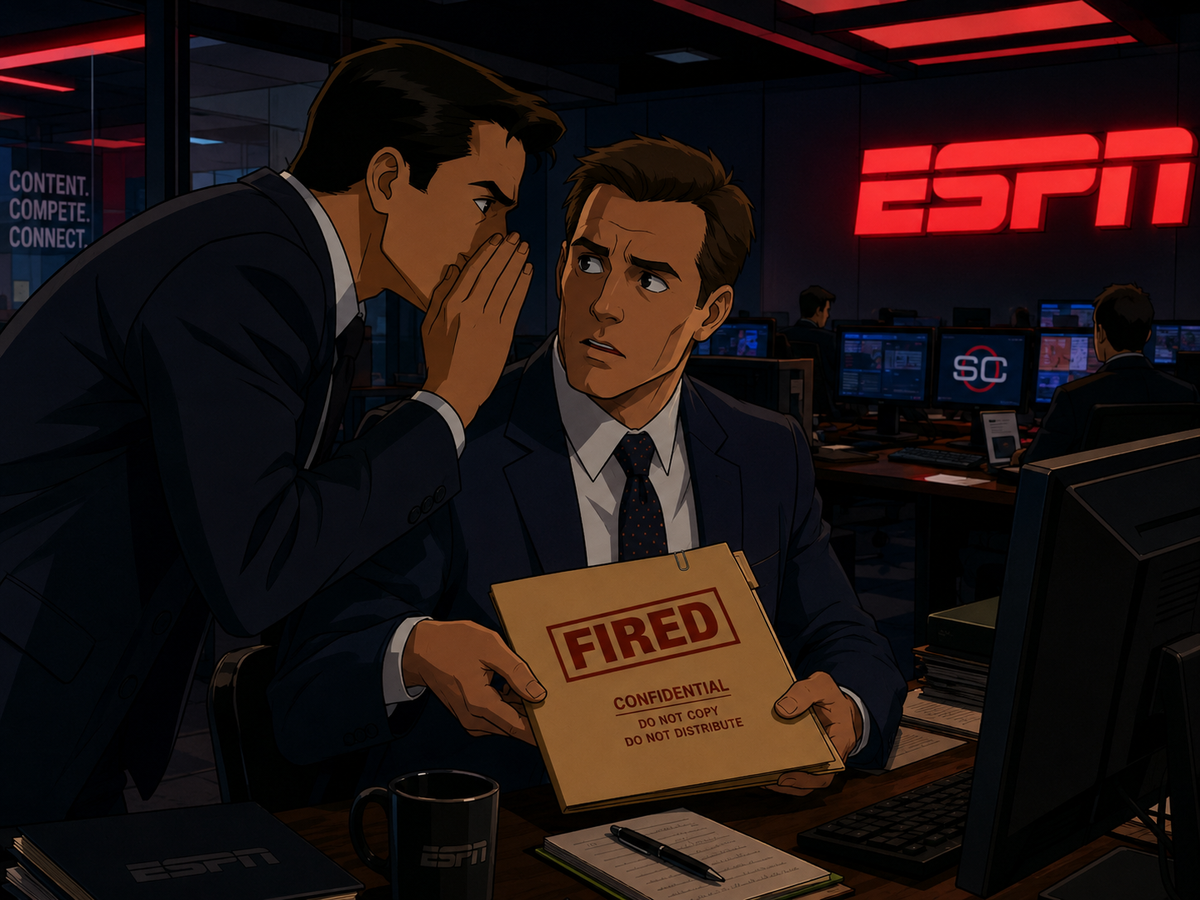
Let’s be honest about the execution first. What ESPN did to Ryan Clark on NFL Live, pulling him off the set during a commercial break because news of his firing was leaking on the internet was completely low brow, sloppy, cowardly, and amateur. Definitely not a SEXI move at all.
You don’t treat an 11 year veteran, a guy who won a Super Bowl, brought real passion to the desk, and delivered sharp commentary like the intern you caught stealing office supplies. It’s a bad look for a brand the caliber of ESPN.
But once you strip away the awkward execution, you have to look at the cold, hard business reality of sports media in 2026. Here’s the truth that nobody in television wants to say out loud: Ryan Clark was fundamentally replaceable.
In modern broadcasting, talent falls into two distinct buckets. There’s the Superstars, and there’s the role-player.
A Superstar brings people to the building. People turn on the TV specifically to watch them. That’s Stephen A. Smith. Love him or hate him, Stephen A. is a cultural event; he drives the daily sports news cycle and generates hundreds of millions of digital impressions. That’s Pat McAfee, who built an entire empire from a garage, brought a fiercely loyal die-hard army with him, and completely dictated his own terms to corporate executives. I don't doubt ESPN is offsetting Pat McAfee's expected $60 million new deal with talent cuts to the rank and file, which they do quite regularly. ESPN doesn't just hire Stephen A. and McAfee, they rely on them to bring millions of dollars of advertising revenue into the company.
Ryan Clark? Ryan Clark is a role-player. He gives your talent roster some depth. He’s articulate, polished, works hard, and brings strong football insight. But if Ryan Clark is the host on NFL Live today, and Marcus Spears or Louis Riddick or Mina Kimes is in that chair tomorrow, the ratings don't move a single decimal point. Not one. The harsh reality of Bristol, Connecticut right now is that outside of Stephen A. Smith and Pat McAfee, every single person at ESPN can be easily replaced without a material economic impact. Former Pro Bowl safety? There are fifty of them retiring this year who would love a shot at the studio. Smart analyst who can break down Cover 2? The market is overflowing with them. When you’re making over $2 million a year as a talent who doesn't move the ratings needle, you are walking a tightrope over a pit of corporate budget cuts.
And that brings us to the biggest takeaway for every creator, employee athlete, and broadcaster in media and business, today: If you don't own the plumbing, you're just renting the faucet. When you rely entirely on a legacy network for your paycheck, your career is subject to executive whims, corporate balance sheets, and boardroom politics. It was rumored that Clark's firing got leaked to Outback by some people at ESPN who didn't agree with his left-based political opinions. The second your salary line-item looks a little too thick to a spreadsheet in Burbank, you’re gone. The smart play and the reason Ryan Clark is ultimately going to be just fine, is building your own platform. Clark didn't just sit on ESPN's set; he co-founded The Pivot. He built his own IP, an audience, and a direct revenue stream that ESPN doesn't own and can't cancel.
ESPN treated the exit terribly. It was messy, handled poorly, and showed a lack of respect for a decade of solid work, But the macro economics don't lie: in traditional media, if you aren't an indisputable ratings engine, you're an expense waiting to be cut. Owning your own platform isn't just a side hustle anymore, it's the only real job security left in America.

Member discussion: